+1 608-594-7071
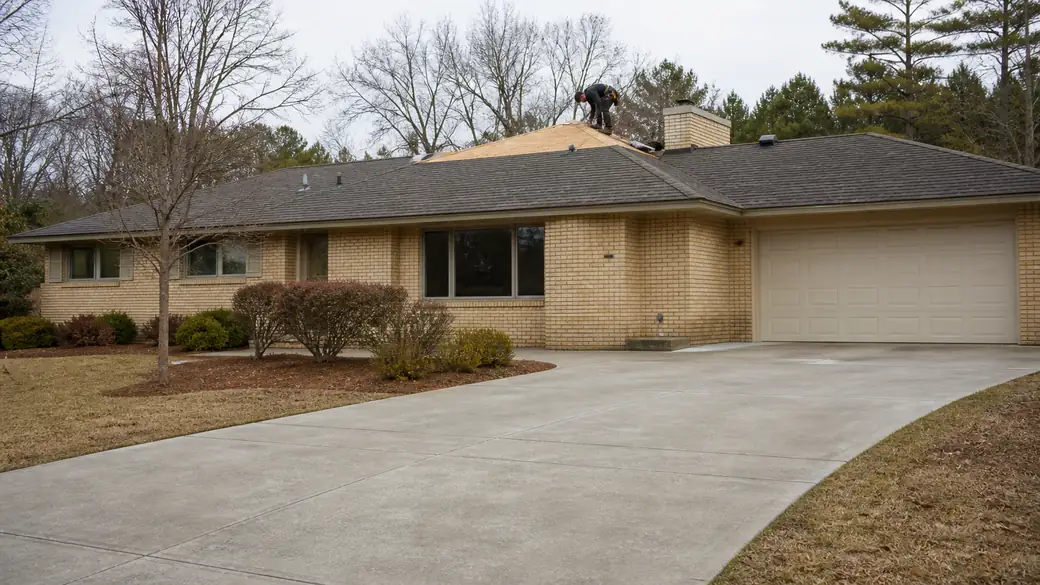
roof installation completed by a local contractor at a buff-brick ranch home in Madison, WI, under bright midday cloud.

Install Roofing in Madison, WI

We install new roofs on residential and commercial buildings across Madison, whether that means a full shingle replacement or a metal roof installation on a house that has never had one. The median home here was built in 1979, so plenty of the roofs we take off have been up a long time. We strip to the deck, repair any structural damage we find, and build the new roof up from there.

Most leaks start at the flashing rather than the shingles: where the roof meets a chimney, a wall, a vent or a skylight. With about 36 inches of snow and 32 inches of rain a year here, those joints see a lot of water. So we treat them as the real work, not the finishing touch. Flat sections and commercial roofs get the same care. Call for a free estimate.

Call +1 608-594-7071

Request an Estimate

What Install Roofing Involves

Image slot Roof Repair Near Me 680px · 16:9 · no image declared for this subject

Roof Repair Near Me

Most leaks we trace start at the flashing, not the shingles. Step flashing along a sidewall lifts, a pipe boot cracks in the sun, or the sealant behind a chimney counterflashing dries out and lets water run behind it. We find where the water really gets in, which is often a few feet uphill of the stain on your ceiling. Then we repair that spot with matching materials and check the decking underneath for soft wood.
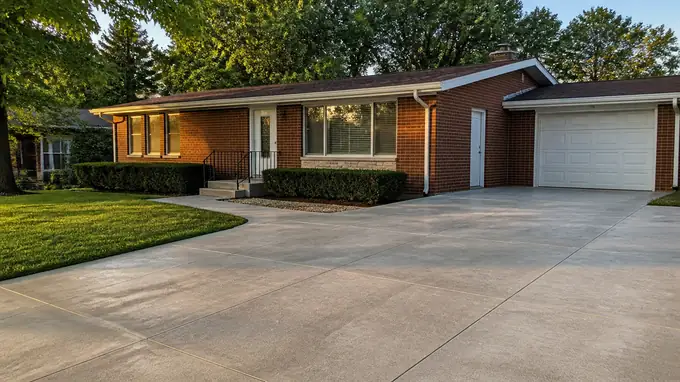
roof inspection completed by a local contractor at a red-brick ranch home in Madison, WI, in late afternoon light.

Roof Inspection

An inspection means us on the roof and in the attic, not a look from the driveway. Up top we check for granule loss, nail pops, loose fasteners on metal panels and the condition of every flashing detail. In the attic we look for daylight at the decking, staining around the nails, and whether the intake and exhaust vents are moving air. We photograph what we find. Nothing gets replaced that a repair would handle.

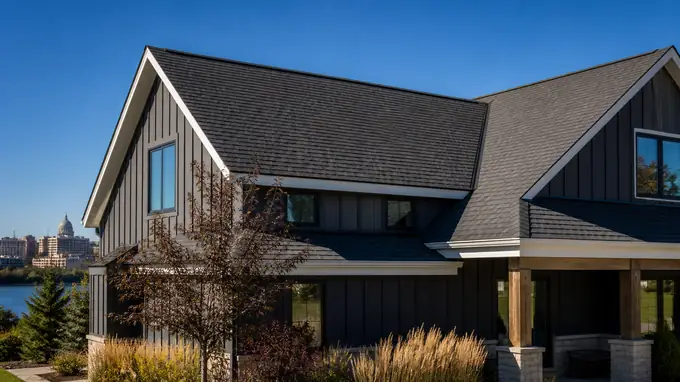
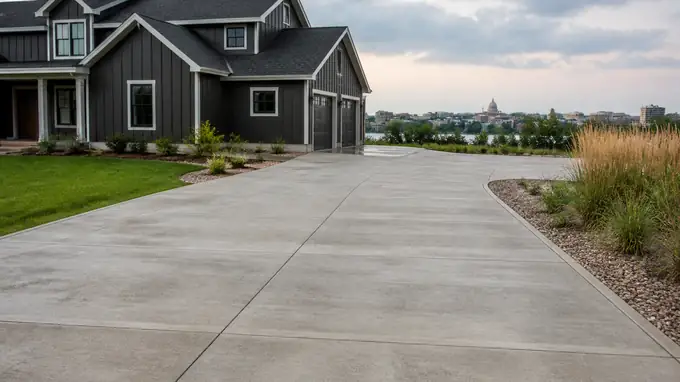
roof replacement completed by a local contractor at a charcoal farmhouse-modern home in Madison, WI, after a rain shower.

Roof Replacement

Replacement starts with a full tear-off down to the deck. Laying new shingles over old ones hides soft wood and traps heat between layers. Once the old roof is off, we cut out delaminated or rotted sheathing and patch it with new panels of matching thickness. Ice and water shield goes at the eaves, valleys and every penetration, with synthetic underlayment over the rest. A home built around 1979 may already have one roof laid over another, so we plan for what's under it.

Install Roofing

New roof installation, on an addition, a garage or a new building, comes down to layering. Drip edge goes on at the eaves, then underlayment, then drip edge on the rakes, so water always laps over the layer below. On a metal roof installation, standing seam panels ride on concealed clips that let the metal move with temperature. Exposed-fastener panels need every screw driven square, so the washer seals instead of crushing. Low-slope sections take a flat membrane.

Our Warranty and Guarantee

A roof earns trust at the details nobody sees from the street. On a metal roof installation or a new shingle roof, that means flashing bent and set around every chimney, wall and vent, fasteners driven to the right depth, and underlayment lapped so water runs out, not in. That is where we spend our time, because it is where leaks start.

Good work should be easy to check. Ask how the valleys are lined, where the drip edge sits, or how the ridge vents on a metal roof are sealed, and you should get a straight answer with the reason behind it. If an answer sounds vague, keep asking. Call for a free estimate and put those questions to us directly.

Roofing Systems and Materials for Madison

The median home in Madison was built in 1979, so many of the roofs we replace sit on framing from that era. On pitched residential roofs, a new roof installation usually means architectural asphalt shingles. Where an owner wants a longer service life and a roof that sheds snow, we do metal roof installation, mostly standing seam panels. Flat and low-slope sections, on homes and commercial buildings alike, get a membrane system.

Whatever goes on top, the details underneath decide how it performs. Leaks almost never start in the open middle of a roof. They start at flashing, valleys, chimneys and walls. With about 36 inches of snow a year here, we pay close attention to underlayment at the eaves and to ventilation. We also check the structural decking before any materials go down, and replace boards that have gone soft.

How Much Does Install Roofing Cost in Madison?

Every roof prices out differently, and most of the difference sits in things you can check from the driveway or the attic. Here is what moves the number on a new roof installation, and which way it pushes.

What changes the priceWhich wayWhy
Layers of old shinglescosts moreEvery layer has to be torn off, hauled away and cleared before we can inspect the deck. The median home here was built in 1979, so count how many are on yours.
Soft or rotted deckingcosts moreSheathing that gives underfoot gets cut out and replaced before anything new goes down. Look for sagging lines or stained boards in the attic.
Steep pitchcosts moreA roof you cannot walk needs harnesses, roof jacks and slower work on every section.
Where a truck and dumpster can parkcosts more when farIf the dumpster cannot sit near the eaves, tear-off gets carried by hand across the yard.
Chimneys, skylights and wall joinscosts moreEach one gets its own flashing, cut and fitted by hand. That is where most leaks start.
Ice and water membranecosts moreWith about 36 inches of snow a year, we run it up the eaves and through every valley.
Metal instead of asphaltcosts more up frontMetal roof installation means custom trim and careful fitting at every edge and penetration.
Plain slopes with few cutscosts lessLong, simple runs go down quickly with little waste.

When you compare bids, check the same lines on each. Is the old roof coming off, or is the new one going over it? How much decking replacement is included? Is the flashing new or reused, and where does the membrane go? A lower number often leaves one of those out, so ask each roofer to put it in writing.

Frequently Asked Questions About Install Roofing in Madison

Can you install new asphalt shingles over my existing roof?

Yes, if there is only one layer on now and the decking underneath is solid. We still steer most homeowners toward a full tear-off. A second layer hides soft spots, adds weight, and leaves the old flashing in place, which is where most leaks begin. On a house built around 1979, the median year here, the original deck deserves a look before anything goes over it. Two layers is our limit. Past that, everything comes off.

Can you install new insulation over existing insulation that's already on my roof?

Yes, as long as what is already up there is dry. On flat and low-slope roofs we often add rigid insulation board over the existing layer to improve thermal performance before the new membrane goes down. Wet insulation is a different story. It holds water, loses most of its value, and rots the deck from above. We take core samples first, cut out anything saturated, and only build over material that tests dry.

Can you install a new roof over an existing commercial roof?

Yes, in many cases. A recover system over an existing commercial roof avoids a full tear-off and keeps the building running while the work happens. It only makes sense when the deck is sound, the old roof is dry, and the structure can carry the added load (snow included, and this area averages about 36 inches a year). Metal roof installation over an aging flat roof is one option we weigh. If any of those checks fail, the old roof comes off.

How long do wood shake and shingle roofs typically last?

Longer when they are cut well, installed well, and allowed to dry out between storms. Species, thickness, treatment, and how much shade sits on the roof change the answer more than any single number would. With about 32 inches of rain and 36 of snow a year in Madison, trapped moisture and moss are what wear shakes down. Maintenance matters: clear debris, keep valleys open, replace split shakes early. The honest answer for your roof comes from getting up on it.

What if I can't see any damage from the ground?

That is normal, and it is why we climb. Most roof damage starts small: a lifted shingle tab, cracked sealant around a vent pipe, flashing pulled loose at a chimney. None of it shows from the driveway. Clues inside the house are easier to spot. Look for stains on the ceiling, damp insulation in the attic, or granules collecting in the gutters. If you see any of those, or just want to know where things stand, call for a free estimate.

Who installs skylights for commercial buildings in Madison?

We do. Madison Precision Roofing installs skylights on commercial buildings as part of the roofing work, not as an add-on. That means framing the opening so the structural load is carried properly, setting a curb, and tying the flashing into the membrane so water has nowhere to go. We handle the permit. On an existing roof we check the surrounding membrane first, since a new skylight cut into a tired roof often becomes the next leak.

How a Install Roofing Job Runs in Madison

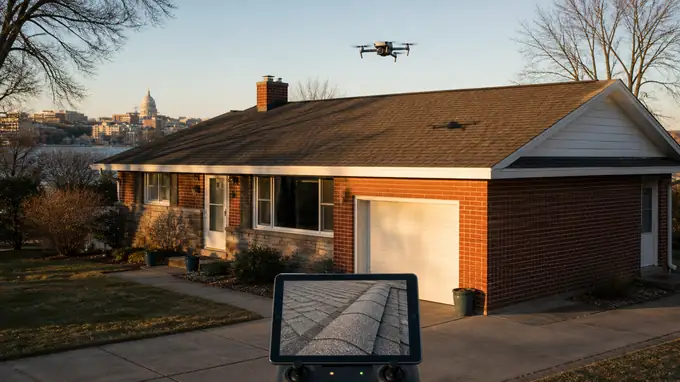
A drone hovers over a steep roof to photograph areas too high to reach by ladder. at a red-brick ranch home in Madison, WI, in late afternoon light.

Step 1: Roof Inspection

We start on the roof and finish in the attic. Outside, we check for granule loss, curled or lifted shingles, soft spots underfoot, cracked pipe boots, and every piece of flashing at chimneys, walls and vents. Inside, we look at the underside of the deck for water stains, daylight around nails, and frost or mold that points to poor ventilation. We photograph what we find, so you see the same roof we do.

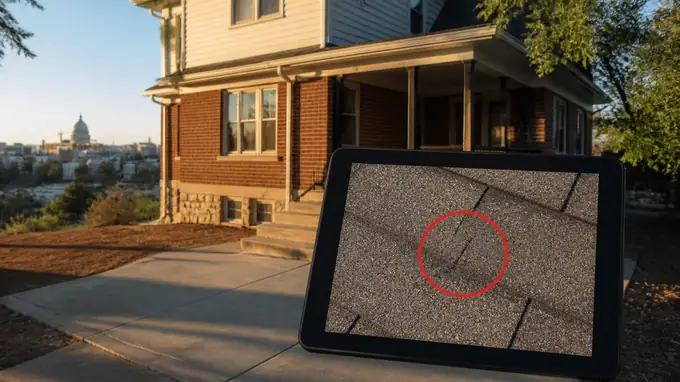
A roofer scrolls through inspection photos on a tablet while preparing the homeowner's estimate. at a brick-and-siding two-story home in Madison, WI.

Step 2: Written Estimate

Everything we found goes into a written estimate: tear-off, how many layers come off, underlayment type, the shingle or metal panel line, flashing work, ventilation changes, permit and disposal. Each item sits on its own line, so two quotes can be compared honestly. Decking is the one thing nobody can fully judge until the old roof is off, so the estimate spells out how any rotted sheets are counted and billed.

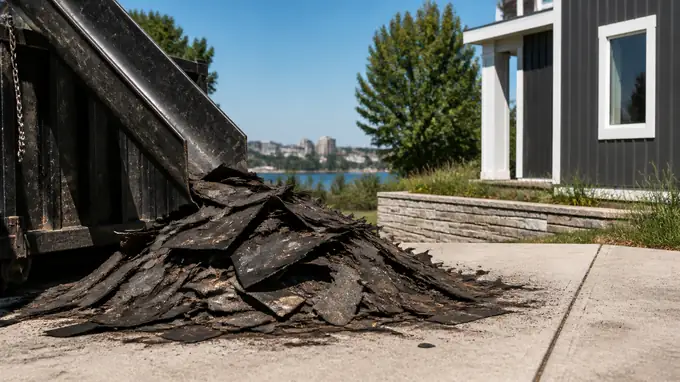
Workers tear off old shingles and toss them down a debris chute. at a charcoal farmhouse-modern home in Madison, WI, in clear late-morning sun.

Step 3: Removal of Old Materials

Tear-off goes all the way down to bare deck. Shingles, felt, old drip edge, rusted valley metal and nails all come off, including a second layer if someone roofed over the first. Before that starts, we tarp the landscaping, lean plywood over windows, and park the dumpster where it won't crack the driveway. We open only as much roof as we can dry in the same day, so bare decking never sits overnight.

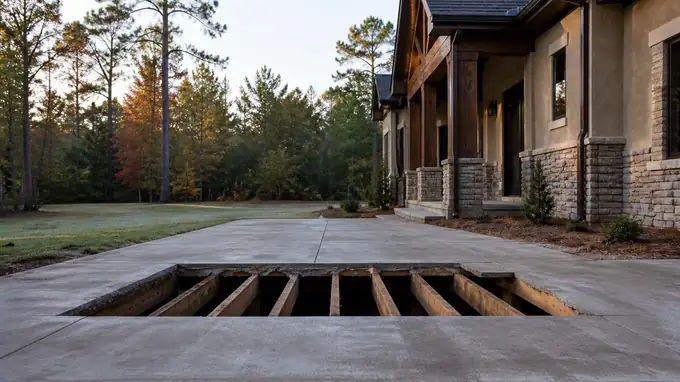
A roofer checks exposed roof rafters for daylight gaps before sheathing goes back down. at a painted-white-brick two-story home in Madison, WI.

Step 4: Deck Repair

With the roof off, the deck shows its real condition. We walk every sheet and replace anything soft, delaminated or rotted, usually around chimneys, valleys and eaves, where water sat longest. Old plank decking with wide gaps gets new plywood or OSB sheathing so shingles have a solid, even base. Loose sheets are renailed into the rafters. Rot that reaches the rafters themselves is structural work, and we show it to you before we touch it.

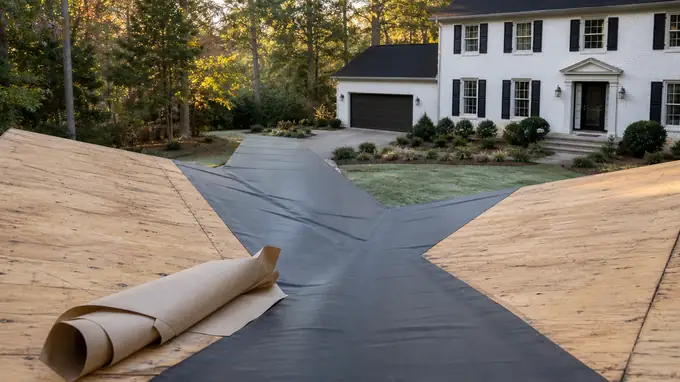
A roofer installs ice-and-water shield in a roof valley before the main underlayment. at a painted-white-brick two-story home in Madison, WI.

Step 5: Underlayment Installation

Before any shingle goes down, the deck gets its protection layers. Self-adhered ice and water membrane runs along the eaves, up the valleys, and around chimneys, skylights and pipe penetrations, the places where melting snow backs up and finds a gap. The area sees about 36 inches of snow a year, so the eaves get real attention. Synthetic underlayment covers the rest, with drip edge tucked under it at the eaves and lapped over it at the rakes.

A roofer fits new flashing around a roof vent during shingle installation. at a brick-and-siding two-story home in Madison, WI, in late afternoon light.

Step 6: Roofing Installation

New roof installation follows the manufacturer's nailing pattern, not a crew's habit. Starter strip goes along the edges, every shingle is nailed in the nail line, and we set new step flashing and counterflashing wherever the roof meets a wall or chimney instead of reusing old metal. For a metal roof installation, standing seam panels are fastened with concealed clips so the metal can expand and contract. Ridge vent goes on last, balanced against the soffit intake.

A contractor and homeowner walk the yard for a final look at the completed roof. at a charcoal farmhouse-modern home in Madison, WI.

Step 7: Final Inspection

Our own inspection comes before anyone else's. We walk the finished roof looking for exposed nail heads, crooked courses, gaps at pipe boots, and short laps in the flashing at every wall and chimney. Then we go back into the attic to confirm no daylight shows and the vents are clear. We handle the permit, so when a municipal inspection is required, we schedule it and meet the inspector on site.

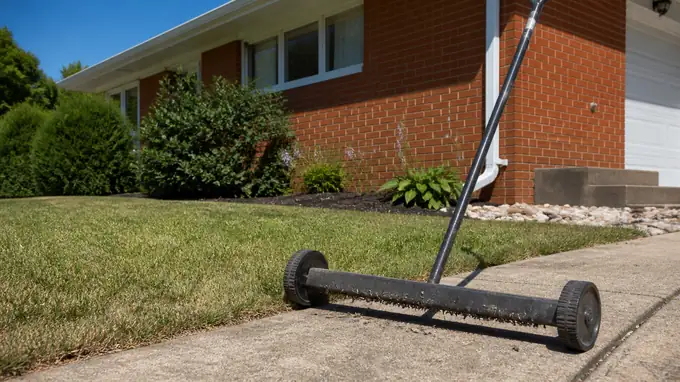
A worker pushes a magnetic sweeper across the lawn to collect stray nails. at a red-brick ranch home in Madison, WI, in clear late-morning sun.

Step 8: Cleanup

Cleanup runs through the whole job, not just the last hour. Debris goes from the roof straight into the dumpster or onto tarps, never into the flower beds. At the end we pull the tarps, clear shingle grit and scraps out of the gutters, and roll a magnetic sweeper across the lawn, driveway and street edge to catch stray roofing nails. The dumpster leaves with the old materials, and the property looks the way it did before we arrived.

Get a Free Estimate

Request an Estimate

Tap to call +1 608-594-7071