+1 608-594-7071
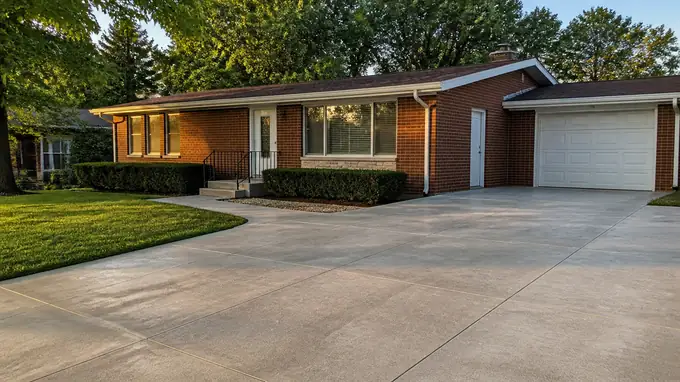
roof inspection completed by a local contractor at a red-brick ranch home in Madison, WI, in late afternoon light.

Madison Precision Roofing: Residential & Commercial roof repairs, roof inspections, roof replacements & roof installations

Madison Precision Roofing repairs, inspects, replaces and installs roofs on homes and commercial buildings in Madison, Wisconsin. The median home around here was built in 1979, which means a lot of the roofing we look at is original, or a second roof that has quietly reached the end of its run. We climb up, walk the whole thing, and tell you what we find in plain terms. Nothing more, nothing less.

Water does the damage. About 32 inches of rain and 36 inches of snow land on these roofs every year, and all of it hunts for the lifted shingle, the cracked flashing, the clogged valley. A small leak runs along a rafter and shows up as a stain far from where it started, so the wet spot on the ceiling is rarely under the actual hole. Flat commercial roofs have their own habits: ponding, seams that open, drains that quit.

Getting it right means materials matched to the building, flashing done properly at every chimney, vent and wall, and someone who walks the roof instead of quoting from the driveway. We handle residential and commercial work the same way, whether it is a single leak on a ranch house in Middleton or a full metal installation on a warehouse. Call for a free estimate. We would rather tell you the roof has a few years left than sell you one you do not need.

Call +1 608-594-7071

Licensed, Bonded, and Insured ยท A combined 15 years of experience

Request an Estimate

We warranty all of our work because we believe in what we do.

Projects We've Done

Most of our work is residential replacement. Homes here are often on an older roof that has usually been patched a few times before we get to it. We tear off to the deck, replace any soft sheathing we find, and lay new underlayment, ice barrier and flashing before the shingles go on. Skylights and chimneys get new flashing every time, not a bead of caulk over the old. The finished roof is a full system, not a fresh top layer.

Repair and storm damage jobs are shorter but not simpler. A leak rarely shows up under the spot where water gets in, so we trace it from the attic side first, then from the roof, before we open anything. Wind lifts shingles along ridges and rakes, hail bruises the mat and knocks granules loose, and the fix depends on how much of the field is affected. Sometimes that is a handful of shingles and a pipe boot. Sometimes it is a whole slope.

Commercial flat roof installation makes up the rest. Low-slope roofing systems fail at seams, drains and edges, almost never in the middle of the field, so that is where we spend our time. We check that the deck actually drains before the membrane goes down, add crickets and tapered insulation where water would otherwise pond, and weld seams we can probe and verify. Metal edge and coping get fastened to hold, because an edge the wind gets under will peel the rest of the roof behind it.

Choosing the Right System

The right roofing system depends on the building under it, not on what sells best. A steep-pitched house takes asphalt shingles or standing seam metal. A flat or low-slope commercial roof needs a membrane, since shingles cannot shed standing water. A ranch house in Middleton and a flat-roofed commercial building in downtown Madison do not want the same roof. Many homes around here are on an older roof, so we check for a second layer of shingles over the first, because that changes what can go on top. Materials that suit one property fail on the next.

We start on the roof, not in a catalog. We walk it, check the decking from the attic where we can, and look at how the existing flashing and drainage have held up. A roof here spends much of the year moving water, so valleys, eaves and every penetration get a close look. Then we lay out the options that actually fit, usually two or three, each with a plain account of how it performs and what it asks for in maintenance.

What goes wrong is nearly always a mismatch. Metal installed over a deck that flexes. A membrane seamed by a crew that normally does shingles. Heavy shingles on rafters never sized for them. These roofs leak early, and the repair costs more than choosing right would have. Getting it right takes an honest look at the structure, materials rated for the job, and installers who put that system on regularly. It is slower at the front end. It is also the difference between a roof you keep thinking about and one you stop noticing.

What Decides the Price

Size and pitch set the baseline. A steep roof takes longer to walk and needs more staging, and a flat roof takes a different membrane and a different crew than a shingled one. After that, the number moves with what we find: how many layers are already up there, whether the decking underneath is sound, how much flashing has to come out and go back in, and how far the tear-off has to travel to the dumpster. Homes reroofed once already often carry a second layer, and that changes the job.

When two bids differ, read past the total. Ask each contractor for the same things in writing:

  • What material, what thickness, and what underlayment goes under it.
  • Whether old flashing is reused or replaced at every chimney, wall and vent.
  • How rotten decking is priced if it turns up, per sheet and per repair.
  • Who hauls the debris and whether cleanup is in the number.
  • What the crew does about ventilation while they are up there.

The cheap bid usually wins by leaving something out. Reused flashing looks fine for a season and then lets water in at the wall, and that leak shows up as drywall repairs and a second roofing visit. Skipped ice barrier along the eaves does the same thing once snow sits there for a while. We would rather quote the full job once and have you compare it fairly than come back to fix a corner someone else cut. Call for a free estimate. An estimate from us starts on the roof, not over the phone.

Our Roofing Process

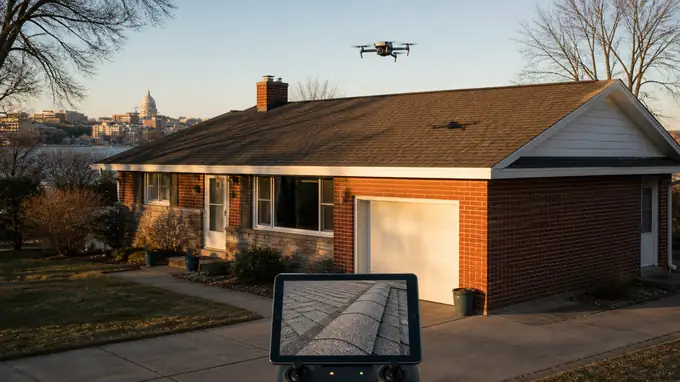
A drone hovers over a steep roof to photograph areas too high to reach by ladder. at a red-brick ranch home in Madison, WI, in late afternoon light.

Step 1: Roof Inspection

We walk the roof, not just the driveway. We check shingles for granule loss and cupping, probe the decking for soft spots, and look hard at the flashing around chimneys, walls, and vent pipes, because that is where most leaks start. In the attic we look for stained sheathing, rusted nail tips, and damp insulation. You get photos of everything we find and a plain explanation of what needs repair now and what can wait.
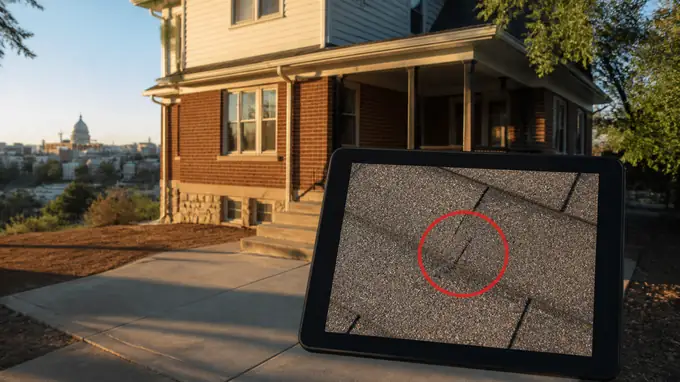
A roofer scrolls through inspection photos on a tablet while preparing the homeowner's estimate. at a brick-and-siding two-story home in Madison, WI.

Step 2: Written Estimate

Our estimate lists every material by name and quantity: shingle brand and line, underlayment type, ice and water membrane, drip edge, ridge vent, and flashing metal. It states what we will tear off, how many layers, and what happens if we find rotten decking. Nothing hides under a single line for labor and materials, so you can compare it against any other bid item by item. Take as long as you need with it.

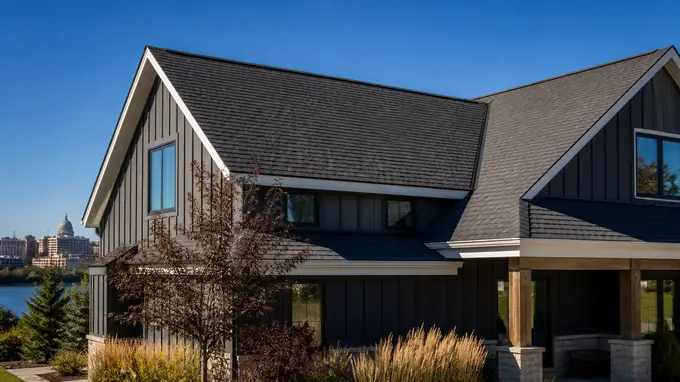
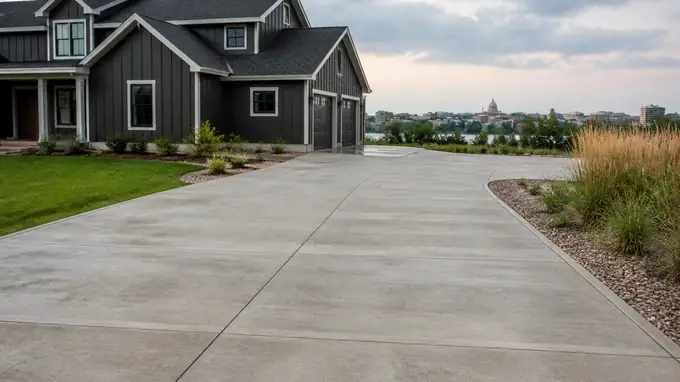
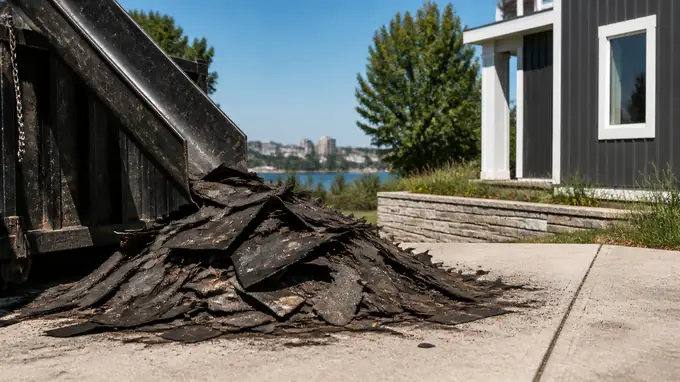
Workers tear off old shingles and toss them down a debris chute. at a charcoal farmhouse-modern home in Madison, WI, in clear late-morning sun.

Step 3: Removal of Old Materials

Old roofing comes off down to bare decking. We strip every layer, pull the nails or drive them flush, and remove the old flashing rather than laying new metal over corroded metal. Tarps protect the siding and landscaping, and a magnet sweep follows the tear-off. Leaving a second layer in place traps moisture, adds weight the structure was never designed for, and hides deck damage. We do not do it.

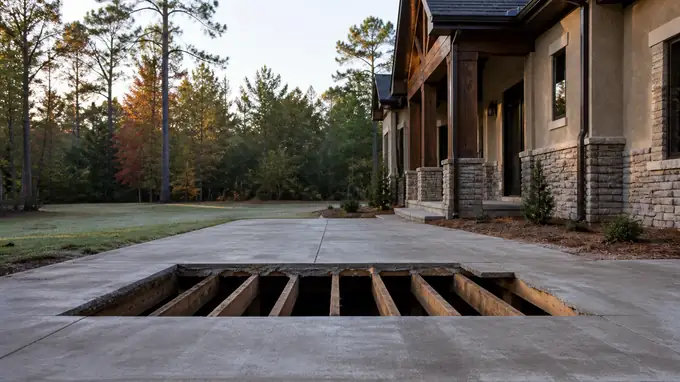
A roofer checks exposed rafters for daylight gaps before decking goes back down. at a stacked-stone and stucco home in Madison, WI, in early morning light.

Step 4: Deck Repair

Once the deck is exposed we check every sheet. Delaminated OSB, rotted plywood, and boards that flex underfoot get cut out and replaced with matching thickness, usually 7/16 inch OSB or 1/2 inch plywood, fastened into the rafters with ring-shank nails. A roof is only as good as what it is nailed to. Skipping this is how a new roof ends up with nails backing out and shingles lifting in its first season.

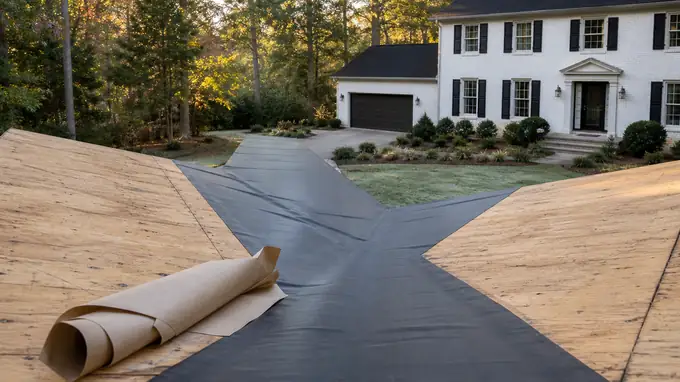
A roofer installs ice-and-water shield in a roof valley before the main underlayment. at a painted-white-brick two-story home in Madison, WI.

Step 5: Underlayment Installation

Synthetic underlayment goes over the whole deck, overlapped and cap-nailed, with self-adhering ice and water membrane at the eaves, in the valleys, and around every penetration. That membrane is the protection that keeps meltwater backing up under the shingles out of the house. We install new drip edge at the same time, under the underlayment at the eaves and over it at the rakes.

A roofer fits new flashing around a roof vent during shingle installation. at a brick-and-siding two-story home in Madison, WI, in late afternoon light.

Step 6: Roofing Installation

Shingles start with a starter strip along the eaves and rakes, then run in straight courses with every nail on the nail line, six per shingle on steep or wind-exposed slopes. New step flashing goes in at every wall, counterflashing is cut into the chimney mortar, and pipe boots are replaced rather than reused. Flat sections get a fully adhered membrane with heat-welded or sealed seams. Metal roofing runs in full-length panels with concealed fasteners.

A contractor and homeowner walk the yard for a final look at the completed roof. at a charcoal farmhouse-modern home in Madison, WI.

Step 7: Final Inspection

Before we leave, a lead walks the whole roof again. We check every ridge cap, every flashing lap, every pipe boot, and every exposed fastener for sealant. Intake and exhaust vents are confirmed open, since attic airflow decides the performance of the shingles above it. Then we walk it with you, on the roof or from the ground with photos, and go over what maintenance the system needs and how often. Anything you flag gets fixed before we call it finished.

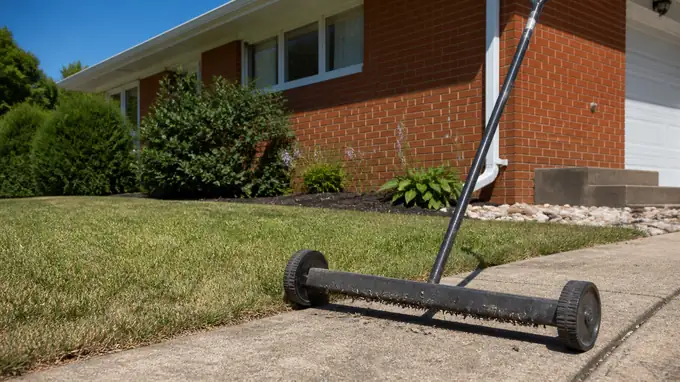
A worker pushes a magnetic sweeper across the lawn to collect stray nails. at a red-brick ranch home in Madison, WI, in clear late-morning sun.

Step 8: Cleanup

Debris goes into the dumpster, not your lawn. We run a rolling magnet across the yard, driveway, and flower beds twice, since one missed nail ends up in a tire. Gutters are cleared of the granules and shingle scraps that wash off during installation. Extra materials are hauled away unless you want spares kept for future repairs. When we pull out, the only sign we were there should be the roof.

Our Services

Image slot Roof Repair Near Me 680px · 16:9 · no image declared for this subject

Roof Repair Near Me

Most calls we get are for a leak that shows up in one spot: a stain on the ceiling, a drip in the attic, shingles in the yard after wind. We trace water back to where it actually enters, which is usually flashing at a chimney, a cracked pipe boot, or a nail that backed out and lifted the shingle above it. Then we fix that, not the whole slope. A small repair done right stays fixed.

roof inspection completed by a local contractor at a red-brick ranch home in Madison, WI, in late afternoon light.

Roof Inspection

An inspection means us on the roof, not looking from the driveway. We check granule loss, lifted tabs, exposed nail heads, step and counter flashing, valley metal, vent boots, and how the decking feels underfoot. Inside, we look at the attic for daylight, moisture and ventilation. You get photos and a plain written list of what we found and what it means, so you can decide with the facts in hand.

roof replacement completed by a local contractor at a charcoal farmhouse-modern home in Madison, WI, after a rain shower.

Roof Replacement

Tear-off is where a replacement gets decided. Once the old shingles are off we see the decking, and on older houses we regularly find soft plywood or plank sheathing with gaps that has to be replaced before anything goes on top. From there: ice and water shield along eaves and valleys, synthetic underlayment, new drip edge, new flashing, then the roof. Reusing old flashing under a new roof is how leaks come back.

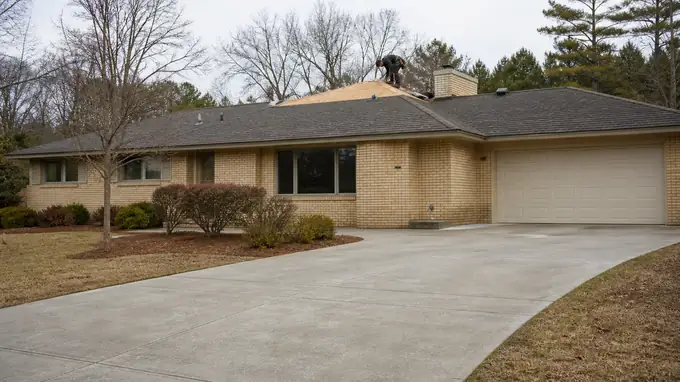
roof installation completed by a local contractor at a buff-brick ranch home in Madison, WI, under bright midday cloud.

Install Roofing

New construction, additions and garages get the same build as a full replacement. We set starter strip at the eaves and rakes, run ice and water membrane past the warm wall line, and check nail placement so fasteners land in the manufacturer's zone instead of high on the shingle. Ridge and soffit venting are sized to the attic so the roof breathes. Fastening and ventilation decide how long a roof lasts more than the shingle brand does.

metal roof installation completed by a local contractor at a grey split-level home in Madison, WI, in clear late-morning sun.

Metal Roof Installation

Standing seam is the metal roof we install most: concealed clips, no exposed fasteners across the field, panels formed to run eave to ridge in one piece where the slope allows. Heavier-gauge steel with a Kynar finish holds color and sheds snow well. Where an owner wants exposed-fastener panels on a shop or outbuilding, we use butyl-sealed screws and set them straight, because crooked screw heads are the usual leak on those roofs.

residential roofing completed by a local contractor at a brick-and-siding two-story home in Madison, WI, in late afternoon light.

Residential Roofing

Homes here are mostly asphalt shingle, and many are often on their second or third roof. We look at what the last crew left behind: extra layers, tired decking, poor ventilation, flashing that was reused instead of replaced. Then we give you a straight read on repair versus replacement based on what the roof shows us, not on what sells the bigger job.

roof maintenance completed by a local contractor at a painted-white-brick two-story home in Madison, WI, under an overcast sky.

Roof Maintenance

Roofs fail at the details long before they fail across the field. Our maintenance visits clear valleys and gutters, reseal exposed fasteners and pipe boots, check the caulk at counter flashing, and look for lifted shingles after wind. We also check the eaves for ice dam wear and note where attic heat loss is the real cause. Small work now keeps a roof's performance where it should be.

emergency roof repair completed by a local contractor at a grey split-level home in Madison, WI, in late afternoon light.

Emergency Roof Repair Near Me

Storm damage, a limb through the deck, or water running down an interior wall needs a stop first and a permanent fix second. We tarp and secure the opening properly, fastened at the ridge and lapped so water sheds, not weighted down with loose lumber. Once the property is dry we assess the real damage, including wet insulation and decking, and put together a proper repair. Call us when it happens.

flat roof repair completed by a local contractor at a painted-white-brick two-story home in Madison, WI, under bright midday cloud.

Flat Roof Repair

Our commercial roofing services cover flat and low-slope roofs, which leak at seams, drains and edge metal more than anywhere else. We repair EPDM with primed seam tape and cover strips, TPO by heat-welding new membrane over the failed area, and modified bitumen with torch or cold-applied patches matched to the existing system. Ponding water gets fixed with tapered insulation or a new drain, because a patch over a pond does not hold.

Where We Work

  • Madison
  • Fitchburg
  • Middleton
  • Sun Prairie

Frequently Asked Questions

Do you perform inspections to identify potential leak vulnerabilities?

Yes. We walk the roof, check the flashing at chimneys, vents and valleys, and look inside the attic for staining or daylight. Leaks rarely start where the water shows up. Much of what we inspect has been patched before, and we pay attention to where older work meets newer materials. We put what we find in writing.

What preventive measures can I take to reduce moss growth between professional cleanings?

Keep the roof dry and lit. Trim branches that shade the surface, clear leaves and needles out of valleys and gutters each fall, and make sure downspouts carry water well away from the building. Moss wants standing moisture, and the shaded slopes stay damp longest. Zinc or copper strips near the ridge help on some roofs. Skip pressure washing, which strips granules and shortens shingle life.

How does the warranty work for repairs done on storm-damaged roofs?

Repair warranties in this trade usually split in two: the manufacturer covers defects in the materials, and the contractor covers the workmanship. Storm damage adds an insurer, so when we repair it the scope often follows the adjuster's report. Ask for the terms in writing before work starts, with what is covered, for how long, and what voids it spelled out. Damage from a later storm is a new claim, not a warranty matter.

What types of commercial roofs do you work on?

Flat and low-slope systems make up most of our commercial roofing work: TPO and EPDM membranes, modified bitumen, and standing seam metal on buildings that carry more pitch. We handle repairs, full replacements and maintenance on each. On a flat roof the trouble spots are seams, drains, curbs and parapet flashing, and that is where we look first. A warehouse in Sun Prairie gets the same walkthrough as a storefront in Madison.

How much money will energy-efficient tiles save on my cooling costs?

That depends on the rest of the house more than on the tile. Reflective tiles lower the surface temperature of the roof, but how much of that reaches your cooling bill turns on attic ventilation, insulation depth, where the ductwork runs and how much roof faces south and west. We do not quote a savings figure without seeing the attic. On a poorly vented roof, fixing the ventilation usually does more than the tile.

Do you offer wind-resistant upgrades during repairs?

Yes. A repair is a good time to add them because the deck is already open. Common upgrades are a high-wind nailing pattern with extra fasteners per shingle, a sealed starter course along the eaves and rakes, ring shank nails on loose sheathing, and heavier drip edge. On metal roofs we tighten clip spacing near edges and corners, where uplift is strongest. None of it changes the look of the roof.

What types of skylights do you install?

Fixed, vented and tubular units, in deck-mounted and curb-mounted styles. Deck-mounted skylights sit low and flash directly to the sheathing, which suits a new roof. Curb-mounted units sit on a raised frame and are the usual choice when replacing an existing skylight or working on a flat roof. Most leaks blamed on skylights are flashing problems, so we use the manufacturer's flashing kit and tie it into the underlayment. Where the City of Madison requires a permit for the opening, we pull it.

What type of attic insulation is best?

Blown cellulose or blown fiberglass for most attics, because both fill around framing and wiring without gaps. Batts work when the joist bays are open and regular. Spray foam belongs on the underside of the deck only when the attic is being brought inside the conditioned space, and that changes how the roof needs to breathe. Whatever you choose, keep the soffit vents clear and baffled. Insulation without airflow puts moisture in the roof deck.

Tap to call +1 608-594-7071