+1 608-594-7071
gutter installation completed by a local contractor at a stacked-stone and stucco home in Madison, WI, under an overcast sky.

Gutter Installation in Madison, WI

Gutters have one job: take the water off your roof and put it somewhere it can't hurt the house. In Madison that means handling about 32 inches of rain a year, plus whatever 36 inches of snow leaves behind as it melts. We install gutters and downspouts sized to the roof they drain, pitched so water keeps moving, and fastened to hold when they run full.

Half the homes here were built before 1979, so we often find gutters that have been patched more than once. Sagging runs, leaking seams and downspouts that empty against the foundation are the usual problems. Before we hang anything new, we check the fascia, the drip edge flashing and the grade where the water lands. A new gutter on soft wood or a bad slope just moves the leak.

Call +1 608-594-7071

Request an Estimate

What Gutter Installation Involves

Image slot Roof Repair Near Me 680px · 16:9 · no image declared for this subject

Roof Repair Near Me

Most leaks we trace start at the flashing, not the shingles. Step flashing behind siding gets bent back during a gutter swap, a pipe boot's rubber collar splits, or chimney counterflashing pulls out of its mortar joint. We find where the water actually gets in, which is often a few feet uphill from the stain on the ceiling, and fix that. Cracked or missing shingles are replaced to match, nailed through the sealant strip, and sealed down by hand.
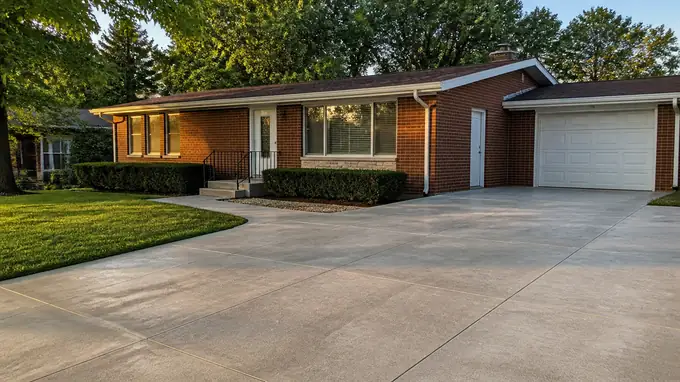
roof inspection completed by a local contractor at a red-brick ranch home in Madison, WI, in late afternoon light.

Roof Inspection

We start at the gutters, because what collects in them says a lot: a heavy load of granules means the shingles are wearing through their surface. Then we walk the roof where it is safe to walk and check flashing, pipe boots, valleys, vents and every nail line we can see. In the attic we look for daylight, damp sheathing and rusted nail tips. We photograph what we find, good and bad, and walk you through it.

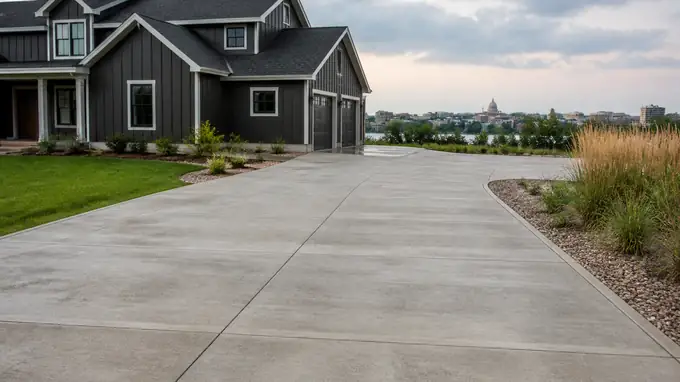
roof replacement completed by a local contractor at a charcoal farmhouse-modern home in Madison, WI, after a rain shower.

Roof Replacement

Replacement means tearing off to the deck, not layering over the old roof. That lets us see the sheathing, and on a house built around 1979 (the median build year in Madison) we check every sheet and replace any that has gone soft. Ice and water shield goes along the eaves and in the valleys, synthetic underlayment over the rest, with new drip edge and new flashing throughout. The gutters come down for the tear-off anyway, so it is the natural time to replace them.

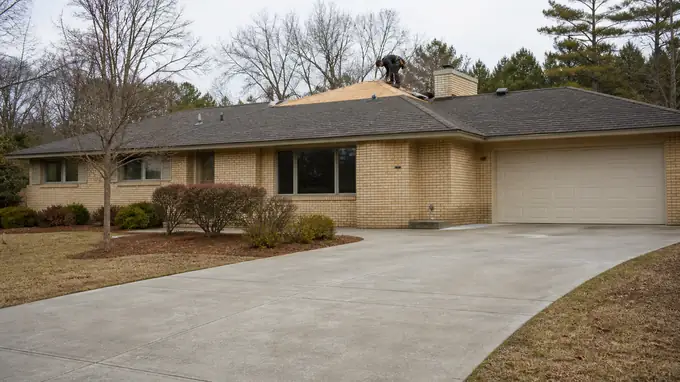
roof installation completed by a local contractor at a buff-brick ranch home in Madison, WI, under bright midday cloud.

Install Roofing

We install architectural asphalt shingles, standing-seam metal and, on low-slope sections, single-ply membranes such as EPDM or TPO. Each goes down to the manufacturer's written instructions: nail pattern, underlayment, ventilation. With about 36 inches of snow a year here, we talk through snow guards on any metal roof that sheds over a door or walkway. Gutters are sized to the roof area they drain, and downspouts go where the grade carries water away from the foundation.

Our Warranty and Guarantee

What holds a gutter up over the years is the work, not the paperwork. We size each run for the roughly 32 inches of rain that falls here a year, pitch it so water leaves through the downspouts instead of sitting, and fasten into solid wood behind the fascia. Snow matters too. Around 36 inches comes down in an average year, and hangers set too far apart give first.

Before any work starts, ask us to put the scope in writing: the materials, the gutter size, where each downspout drains. Read it, then ask what happens if a seam opens or a section pulls away. Clear answers to those questions before you sign are worth more than any line on a web page. Call for a free estimate.

Roofing Systems and Materials for Madison

Gutters only work as well as the roof edge they hang from, so we look at the whole roofing system first. The median home here was built in 1979, so many of the houses we see have fascia boards and drip edge worth inspecting before anything new goes up. We check the flashing, the decking at the eaves and the shingle overhang. Soft wood gets replaced before gutters go on.

Madison averages about 32 inches of rain and 36 inches of snow a year, and most of it leaves the roof at the edge. Asphalt shingle roofs get a drip edge that carries water past the fascia and into the trough. Metal roofs shed snow in sheets, so we set and fasten gutters to handle it. Flat roofs drain through scuppers, and we size the downspouts to match.

How Much Does Gutter Installation Cost in Madison?

We price every gutter job after walking the house, because two homes with the same roofline can land far apart. The length of the eaves matters less than what sits behind them, what has to come down first, and where the water goes once it leaves the roof. Most of these you can check yourself from the yard.

What changes the priceWhich wayWhy
Soft or rotted fascia behind the old guttercosts moreHangers need solid wood to bite into, so damaged boards get replaced before anything goes up.
Old gutters still on the housecosts moreThey come off first, get hauled away, and the old spike holes get sealed.
Second- and third-story eavescosts moreTaller runs mean more ladder work and more time setting up safely at each corner.
A clear drive from the street to the eavescosts lessWe form one-piece runs on site from a coil machine on the truck, so a close truck means shorter carries.
Closer hanger spacing and heavier metalcosts moreWith about 36" of snow a year, a gutter carries real weight in winter, and the extra hangers earn their keep.
Inside and outside cornerscosts moreEach miter is cut, fitted and sealed by hand, and every one is a spot that has to stay tight.
Downspouts tied into buried drain linescosts moreIf lines are already in the ground, we check they flow before connecting, and clearing a clogged one adds work.
Guards over the guttercosts moreThey add material and fitting time, but cut down on cleaning where trees overhang the roof.

When you line up bids, check that each one names the same things: metal gauge, hanger type and spacing, the number and size of downspouts, and where each one discharges. Ask whether removal, haul-away and fascia repair are included or added once the old gutters are off. A lower bid that leaves those out is usually a different job, not a cheaper one.

Frequently Asked Questions About Gutter Installation in Madison

How does the installation process for gutter guards work?

We start by clearing the gutters and flushing the downspouts, because a guard laid over debris only hides the problem. Then we check the pitch and every hanger, reset anything that sags, and seal seams that leak. The guards go on next, fitted to the gutter lip and tucked under the roof edge or fastened to the fascia, depending on the style. Last, we run water through to confirm it drains.

What warranties or guarantees do you offer on gutter and gutter guard installations?

Coverage has its own section on this page, so we won't repeat it here. What we can speak to is the work itself. Hangers go in close enough to carry a full gutter. Seams are sealed, every run is pitched toward its downspout, and the whole system gets a water test before we pack up. If you have questions about coverage, the free estimate is a good time to raise them.

How long does a metal overlay installation take for large commercial buildings?

There's no honest single answer without seeing the building. Duration depends on the square footage, how many penetrations and curbs need flashing, the condition of the existing roof underneath, and how easily materials reach the deck. Weather matters too: Madison sees about 32 inches of rain and 36 inches of snow a year, and metal panels don't go down in either. A real timeline starts with walking the roof.

How much does gutter guard installation cost?

Price comes down to the house in front of us. Total linear footage matters most, followed by the guard style, the roof pitch, and how many stories up the work sits. Gutters that need repairs first, like loose hangers or leaking seams, add to it. We would rather quote your home than guess at it here. Call for a free estimate, which is measured run by run.

Do you offer gutter maintenance?

Yes. Maintenance covers clearing leaves and shingle grit out of the troughs, flushing downspouts, tightening or replacing hangers, and resealing seams that have started to drip. We also look at the flashing and the roof edge while we're up there, since water that gets behind a gutter usually starts at one of those two spots. Guards cut down on cleaning, though they still need an occasional check.

What are common gutter problems?

Clogs are the big one: leaves and grit settle, water backs up, and it spills over the front or behind the fascia. Sagging is close behind, usually from hangers spaced too far apart or pulled loose by weight, and about 36 inches of snow a year adds plenty of that. Leaking seams and corners show up on older systems. With the median Madison home built in 1979, a lot of original or long-patched gutters are still hanging.

How a Gutter Installation Job Runs in Madison

An inspector checks the attic framing for water stains with a flashlight. at a painted-white-brick two-story home in Madison, WI, in early morning light.

Step 1: Roof Inspection

We start on a ladder at the eaves, not from the driveway. We press on the fascia for soft spots, check how far the shingles overhang the edge, and note where the drip edge is bent or missing. Then we look at which roof planes and valleys send the most water down, because that decides where the downspouts go. The median home here was built in 1979, and houses that age often have original fascia hiding rot behind aluminum wrap.

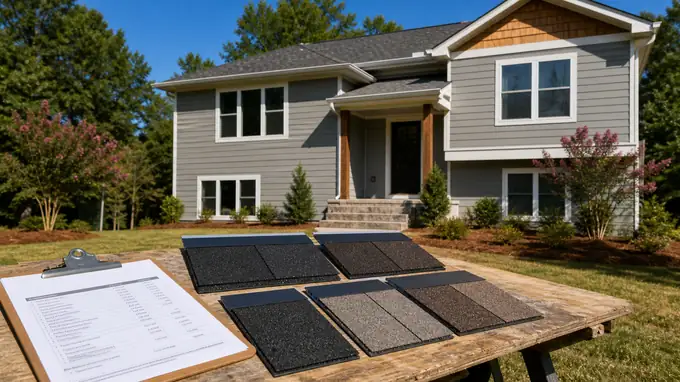
A roofer shows a homeowner asphalt shingle samples while reviewing the estimate. at a grey split-level home in Madison, WI, in clear late-morning sun.

Step 2: Written Estimate

You get the scope on paper: linear feet of gutter, the number and location of downspouts, the profile and material, the hanger type, and every fascia board or deck edge we expect to replace. Rot we cannot see from the ladder is written as its own line, so nobody is caught off guard if a board crumbles when the old gutter comes off. If the job needs a permit, we handle the permit. Nothing starts until you have read it and signed.

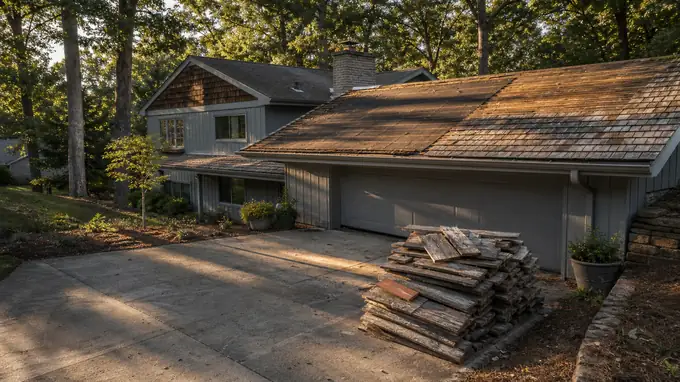
Workers strip aging cedar shakes from a roof before replacement. at a grey split-level home in Madison, WI, in late afternoon light.

Step 3: Removal of Old Materials

Old gutters come down in sections, never ripped off in one pull that splits the fascia. We back out the spikes or hangers, cut the downspout straps, and lower everything to the ground. The bent drip edge and rusted nails along the eave come out next. This is where hidden damage shows itself: spikes that worked loose years ago, stained wood, and gaps where water has been running behind the gutter and into the wall.

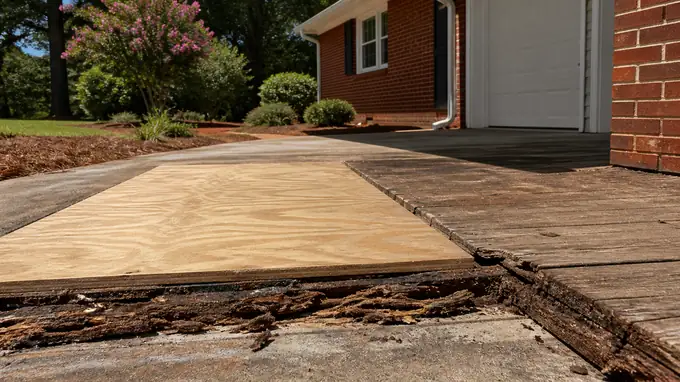
A roofer replaces a rotted section of plywood roof sheathing with new board. at a brick-and-siding two-story home in Madison, WI, in early morning light.

Step 4: Deck Repair

A gutter is only as solid as the wood it screws into. Soft fascia gets cut out and replaced with new stock, primed on all sides before it goes up. If the bottom edge of the roof deck has gone punky from water wicking under the shingles, we cut back to sound sheathing and patch it. Driving new hangers into rotten wood is the most common reason a new gutter sags or pulls away by its second winter.

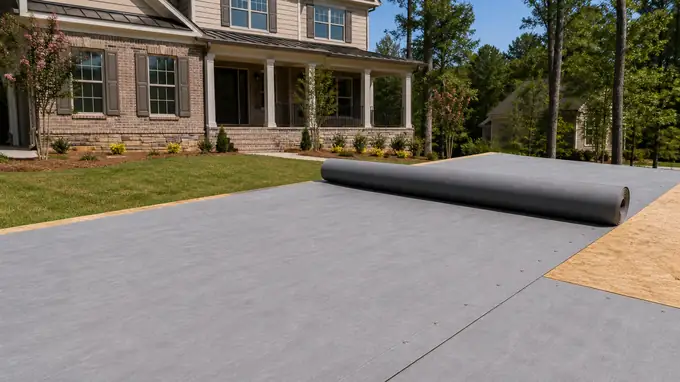
A roofer rolls synthetic underlayment across a bare deck, overlapping each row. at a brick-and-siding two-story home in Madison, WI.

Step 5: Underlayment Installation

At the eave, the new drip edge goes on first and ice-and-water membrane laps over it. That order matters: water that gets under the shingles drains into the gutter instead of behind it and down the fascia. We lift the first course of shingles carefully to do this and replace any that crack. With about 36" of snow a year melting off that edge, the detail at the bottom of the roof carries more water than people expect.

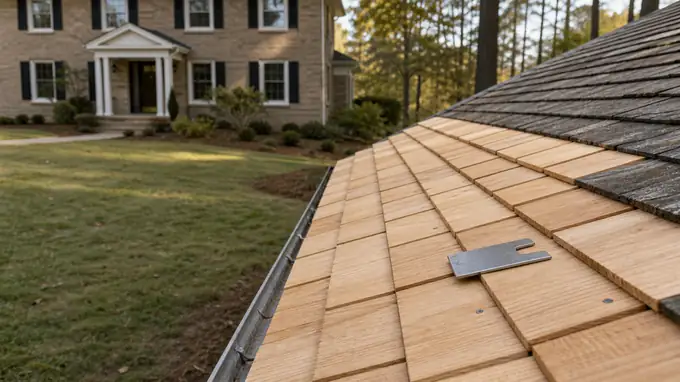
A roofer installs cedar shakes with careful spacing and stainless fasteners. at a tan-brick colonial in Madison, WI, in early morning light.

Step 6: Roofing Installation

Now the gutters go up. We form continuous runs from coil stock on site, so the only joints are at corners and end caps, each one riveted and sealed. Hidden hangers screw through the fascia into the rafter tails, and every run is pitched toward its downspout so it drains rather than holding standing water. Shingles we lifted get sealed back down, and the edge course is set to overhang into the gutter, not past it.

A roofer checks sealant around a chimney flashing before closing out the job. at a buff-brick ranch home in Madison, WI, in early morning light.

Step 7: Final Inspection

Before we call it done, we run a hose on the roof and follow the water. It should travel the length of every run, drop through every downspout, and leave through an extension or splash block well away from the foundation. We watch for drips at the miters, water sheeting over the front lip, and any spot where it pools. Then we show you what we found behind the old gutters and what we replaced.

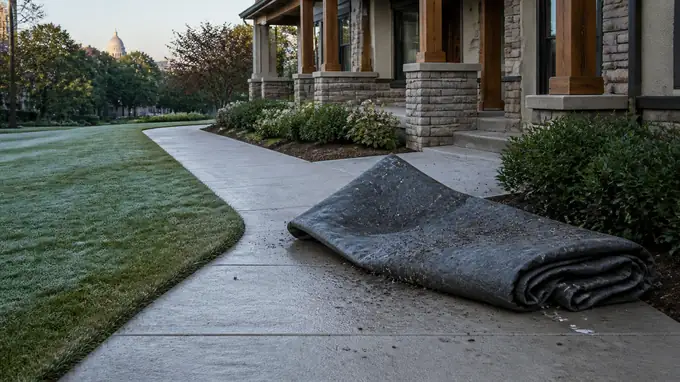
Workers fold up protective tarps laid over landscaping during the roof job. at a stacked-stone and stucco home in Madison, WI, in early morning light.

Step 8: Cleanup

Gutter work leaves small, sharp things behind: rivet mandrels, screw shavings, aluminum offcuts, old spikes. We roll a magnet across the beds and lawn, pick the shavings out of the new gutters themselves, and haul away the old gutters and rotten fascia. Downspout extensions are placed where they will not trip anyone or wash out a planting bed. When we leave, the gutters should look like they were always part of the house.

Get a Free Estimate

Request an Estimate

Tap to call +1 608-594-7071