+1 608-594-7071
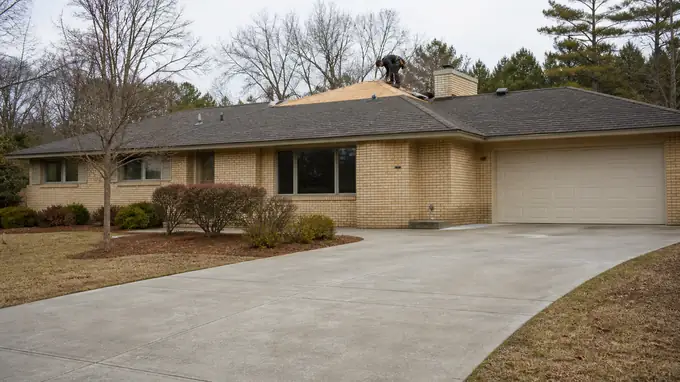
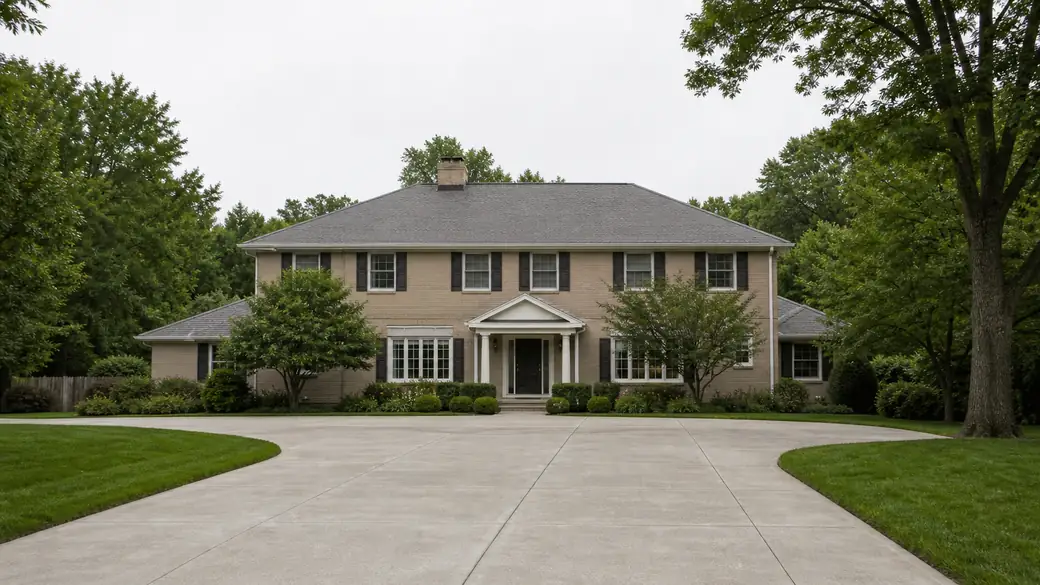
A finished roof photographed from across the yard, showing uniform shingle rows and clean flashing from ridge to eaves. at a tan-brick colonial in Madison, WI.

Roof Repair in Waunakee, Wisconsin

We fix roofs in Waunakee: leaks, lifted shingles, failed flashing around chimneys and vents, and the damage a storm leaves behind. Most repairs start small. A stain on a bedroom ceiling, a drip in the attic after heavy rain, a few shingles in the yard after wind. A roof here takes about 32 inches of rain and 36 inches of snow a year, so a small opening rarely stays small.

Every job starts on the roof itself. We find where the water is actually getting in (often a few feet from the stain) and photograph what we see so you can look at it too. Then we tell you plainly whether a repair will hold or the roof is getting close to replacement. If a repair does the job, that is what we recommend. Call for a free estimate.

Call +1 608-594-7071

Request an Estimate

What We Do in Waunakee

Image slot Roof Repair Near Me 680px · 16:9 · no image declared for this subject

Roof Repair Near Me

Most leaks start at the flashing, not the shingles. A cracked neoprene boot around a vent pipe, step flashing that slipped when the siding was replaced, a chimney counterflashing sealed with caulk instead of cut into the mortar. We find where the water actually gets in, which is often a few feet uphill of the stain on the ceiling. Then we repair that spot with matching materials and check the decking underneath for rot.
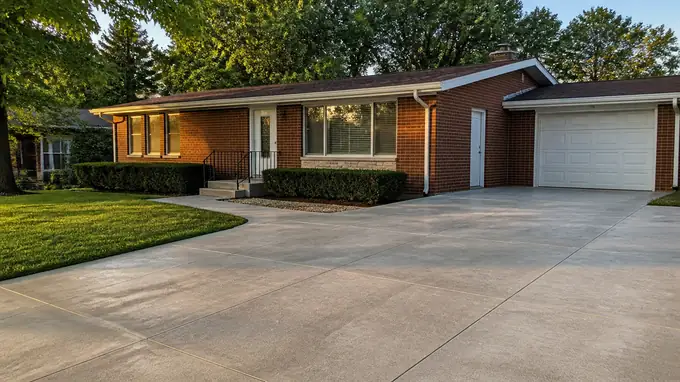
roof inspection completed by a local contractor at a red-brick ranch home in Madison, WI, in late afternoon light.

Roof Inspection

An inspection means going up on the roof, not looking at it from the driveway. We walk every slope and look for granule loss, lifted tabs, nail pops, and sealant that has dried out around penetrations. In the attic we check for daylight at the deck, damp sheathing, frost on nail tips and blocked soffit vents. You get photos of what we saw and a plain account of what needs attention now and what can wait.

roof replacement completed by a local contractor at a charcoal farmhouse-modern home in Madison, WI, after a rain shower.

Roof Replacement

Replacement starts with a full tear-off down to the deck. Layering new shingles over old hides soft spots and traps heat. Once the deck is bare we replace any rotted boards or delaminated sheathing, then lay ice-and-water membrane at the eaves, valleys and around every penetration, with synthetic underlayment over the rest. New drip edge, new flashing, new pipe boots. We do not reuse old metal just because it looks fine from the ground.

roof installation completed by a local contractor at a buff-brick ranch home in Madison, WI, under bright midday cloud.

Install Roofing

New construction and additions get the same attention as a tear-off. On pitched roofs that means starter strip along the eaves, shingles nailed in the manufacturer's pattern, and ridge vent matched to intake at the soffits. Low-slope sections over porches, garages and commercial buildings take a single-ply membrane instead, EPDM or TPO, with seams taped or heat-welded and flashed up every wall. Shingles on a flat roof will leak. We don't put them there.

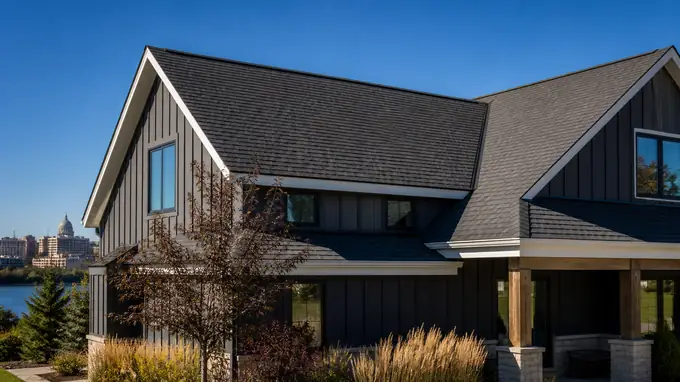
metal roof installation completed by a local contractor at a grey split-level home in Madison, WI, in clear late-morning sun.

Metal Roof Installation

We recommend standing seam steel with a PVDF finish for most houses. Panels run eave to ridge in a single length and fasten with concealed clips that let the metal move with temperature without working the screws loose. Exposed-fastener panels go on faster, but every screw carries a rubber washer that eventually dries out and leaks. With about 36 inches of snow a year, we set snow guards above doors and walkways so it cannot slide off all at once.

Why Waunakee Chooses Madison Precision Roofing

Most roof leaks start small: a lifted shingle, a cracked boot around a vent pipe, flashing that has pulled away from a chimney. We find the actual source before we touch anything, because water travels along decking and rafters and rarely drips where it gets in. Then we repair that spot properly. We do not push a full replacement when a repair will do the job.

A Waunakee roof carries about 36 inches of snow and 32 inches of rain in a typical year, so a repair has to hold through both. We match the materials already on your roof, work new flashing in under the existing courses, and check the surrounding area for the next weak point. Before we leave, we walk you through what we found and what we fixed, with photos. Call for a free estimate.

Choosing the Right Roofing System in Waunakee

Residential roofing comes down to three main systems. Asphalt shingles cover the widest range of homes, and they are the simplest to repair when a section takes damage. Standing seam metal sheds snow well and suits a steeper pitch, though it needs careful flashing at every vent and chimney. Flat or low-slope sections over porches, additions and garages take a sealed membrane instead, because shingles cannot hold water back on a shallow slope. Each one works well on the right roof and poorly on the wrong one.

The right choice starts with your building, not a brochure. We check the pitch, the decking, the attic ventilation and every place the roof meets a wall or chimney, since that is where most leaks begin. With about 36 inches of snow a year, we also look at where snow will sit and where the melt will run. Then we walk you through what each material would do on your roof, and where it would struggle. The decision is yours. We make sure you have what you need to make it.

What Decides the Price of Roofing in Waunakee

Two roofs the same size in Waunakee can land far apart on price, and the reasons usually sit in plain sight. Most of them you can check from the driveway or the attic before anyone climbs a ladder. These are the ones that move the number.

What changes the priceWhich wayWhy
More than one layer of old shinglescosts moreEvery layer comes off by hand and goes in the dumpster before new work starts.
Soft or rotted deckingcosts moreBoards that flex underfoot get cut out and replaced. Nobody knows how many until the tear-off.
Steep pitch or a third storycosts moreThe crew works on harnesses and roof jacks, and every bundle climbs farther.
A driveway the dumpster can back up tocosts lessDebris drops straight in. A long carry across the yard, or a truck parked at the street, adds hours.
Chimneys, skylights and roof-to-wall jointscosts moreEach one gets its own flashing, bent and fitted by hand. That is slow, careful work.
Valleys, eaves and low-slope sectionscosts moreWith about 36 inches of snow a year, these spots get ice and water membrane run wider, and a flat porch roof needs its own membrane.
Gutters and downspouts already draining wellcosts lessWater leaves the roof the way it should, so there is no rework at the eaves.
A simple gable with few breakscosts lessLong straight runs go down fast, with little cutting and less waste.

When bids come in, lay them side by side and check the same things on each: whether the old layers come off or get covered over, how decking replacement is priced, which underlayment goes where, and whether the flashing is new or reused. A lower number that skips one of those is usually a different job, not a better deal.

Waunakee Questions

What type of plants work best on green roofs and commercial rooftops in Waunakee?

Sedums do most of the work. They root shallow, store water in their leaves, and ride out the stretches when a thin growing layer dries out. Hardy grasses and low perennials can join them where the build-up is deeper. The plants are only the top layer, though. Under them sit the drainage mat, root barrier and membrane, and that part decides whether the building stays dry. We build and check that part first.

Does homeowners insurance typically cover wind damage to roofs?

Yes, in most policies, sudden wind damage is covered: shingles torn off, flashing lifted, a limb driven through the deck. Wear and age usually are not, and deductibles vary a lot from one policy to the next. Your adjuster makes the call. What we can do is walk the roof, photograph the damage, and write down what we find, so you and the adjuster are looking at the same facts.

What types of asphalt shingles perform best in Waunakee's climate?

Architectural shingles rated for high wind, in most cases. Around Madison the numbers run to about 36 inches of snow a year, 32 inches of rain, and average lows near 41°F. For that, we lay those shingles over an ice and water membrane at the eaves and valleys, where water and snow sit longest. The shingle matters. The underlayment and flashing beneath it matter just as much.

Do you provide emergency services outside normal business hours?

Yes. If water is coming through a ceiling at night or over a weekend, call us. In the meantime, move what you can away from the drip, set out a bucket, and poke a small hole in a bulging ceiling so the water drains in one spot. Stay off the roof. An emergency fix is usually a tarp or patch that keeps water out until the permanent repair can be done properly.

What causes gutters to leak at the joints and seams?

Mostly sealant that has aged out. Gutter metal grows and shrinks with every temperature swing, and after enough seasons the caulk at the corners and end caps cracks and lets go. Loose hangers make it worse: the run sags, water pools at a seam, and it finds the gap. Leaves and grit packed against a joint hold water there too. Resealing fixes some leaks. Others need the section rehung or replaced.

Can you help with both external noise and internal acoustics?

Yes, as far as the roof is concerned. Rain on a metal roof is the usual complaint, and the answer is in what goes under the panels: solid decking, underlayment, and enough insulation between the roof and the rooms below. Those same layers soften traffic and outdoor noise in Waunakee homes and offices. Echo inside a room is different. That comes down to ceilings, walls and finishes, which is interior work, not roofing.

What to Expect on a Waunakee Roofing Job

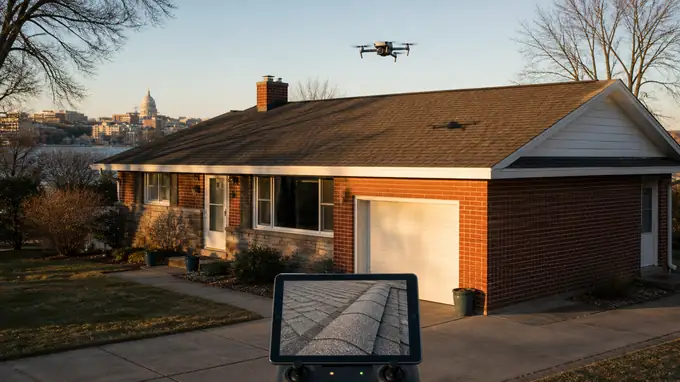
A drone hovers over a steep roof to photograph areas too high to reach by ladder. at a red-brick ranch home in Madison, WI, in late afternoon light.

Step 1: Roof Inspection

We start on the roof and finish in the attic. Outside, we check shingles for lost granules, cracked tabs and lifted edges, then look hard at the flashing around chimneys, vents and skylights, where most leaks begin. Inside, we look for daylight through the boards, dark stains on the rafters and damp insulation. Soft spots underfoot show where the deck has taken on water. You get photos of what we found.

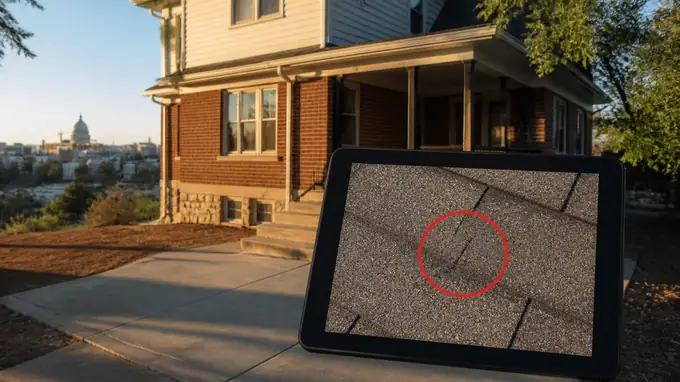
A roofer scrolls through inspection photos on a tablet while preparing the homeowner's estimate. at a brick-and-siding two-story home in Madison, WI.

Step 2: Written Estimate

Everything we plan to do goes on paper before any work is scheduled. The estimate names the shingle line and color, the underlayment, the flashing metal and how many layers come off. It also spells out how we handle rotten decking found once the old roof is up, written as a per-sheet line so it is clear from the start. If the job is a repair rather than a replacement, the estimate says so plainly.

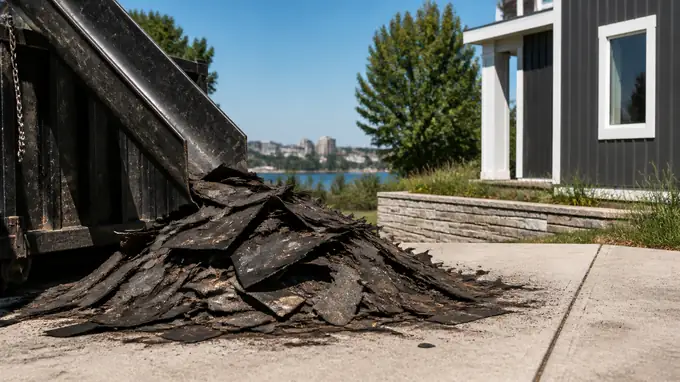
Workers tear off old shingles and toss them down a debris chute. at a charcoal farmhouse-modern home in Madison, WI, in clear late-morning sun.

Step 3: Removal of Old Materials

Tear-off goes down to bare wood. We strip every layer of shingles, the old felt, rusted drip edge and cracked pipe boots, because new materials laid over old ones hide the problems we came to fix. Tarps go over landscaping and against the siding first. A dumpster sits close to the roofline so debris drops straight in instead of across the lawn. We open only as much roof as we can dry in that day.

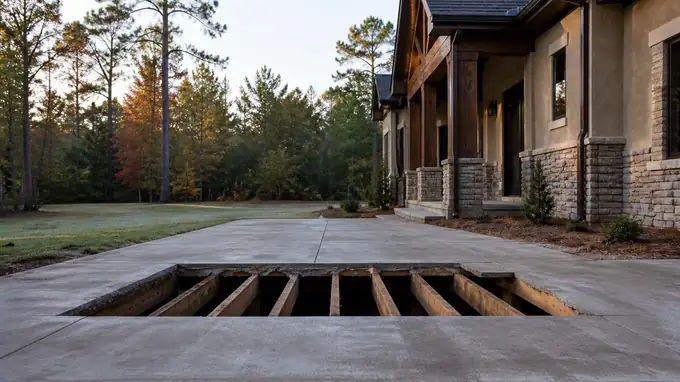
A roofer checks exposed roof rafters for daylight gaps before sheathing goes back down. at a painted-white-brick two-story home in Madison, WI.

Step 4: Deck Repair

With the shingles off, the deck tells the truth. We walk every sheet, and any plywood or OSB that is soft, delaminated or blackened by water gets cut out back to the rafters. New sheets match the thickness of the existing sheathing and are nailed into the framing, not just along the edges. On older plank decks, loose boards are renailed and wide gaps are covered with new sheathing so the roof lies flat.

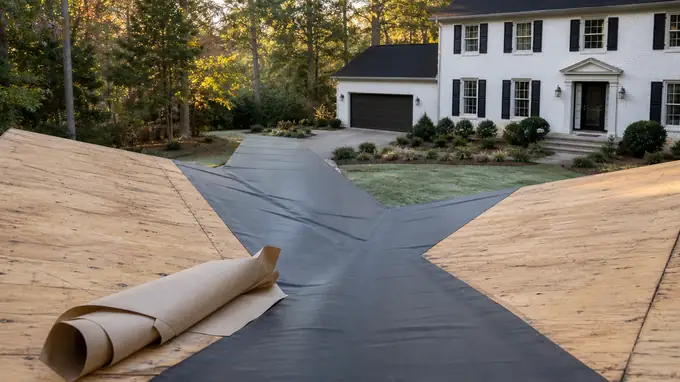
A roofer installs ice-and-water shield in a roof valley before the main underlayment. at a painted-white-brick two-story home in Madison, WI.

Step 5: Underlayment Installation

A self-adhering ice and water membrane goes down first along the eaves, in the valleys and around every penetration. It seals around nail shanks and holds back water that works under shingles when snow lingers at the edge of the roof, and Dane County sees about 36 inches of it a year. The rest of the deck gets synthetic underlayment, lapped and fastened with cap nails. New drip edge goes under the membrane at the eaves and over it at the rakes.

A roofer fits new flashing around a roof vent during shingle installation. at a brick-and-siding two-story home in Madison, WI, in late afternoon light.

Step 6: Roofing Installation

Shingles go on from the eave up, beginning with a proper starter strip so the first course seals along its bottom edge. We nail inside the manufacturer's nailing zone with the count they specify, because high or crooked nails are how shingles blow off. Step flashing is woven in course by course against walls and chimneys. Pipe boots and vents are replaced, never reused. Ridge vent and ridge cap finish the top so the attic can breathe.

A contractor and homeowner walk the yard for a final look at the completed roof. at a charcoal farmhouse-modern home in Madison, WI.

Step 7: Final Inspection

Before we call it finished, we walk the whole roof again. We check that shingles are sealed down, nail heads are covered, flashing sits tight at walls and chimneys, and the ridge vent is open and clear. Then we go back into the attic and look for daylight around penetrations. You walk the property with us, and anything that is not right gets fixed while the crew and materials are still on site.

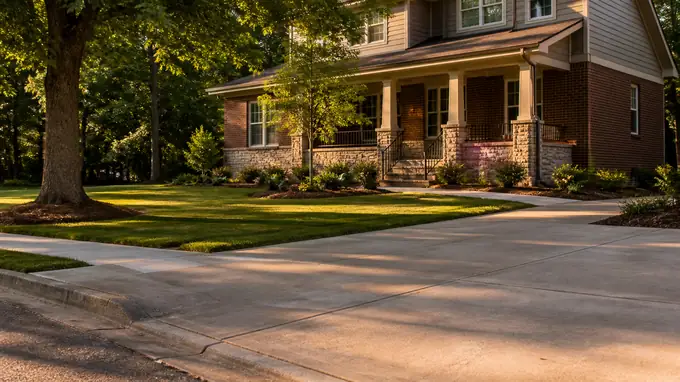
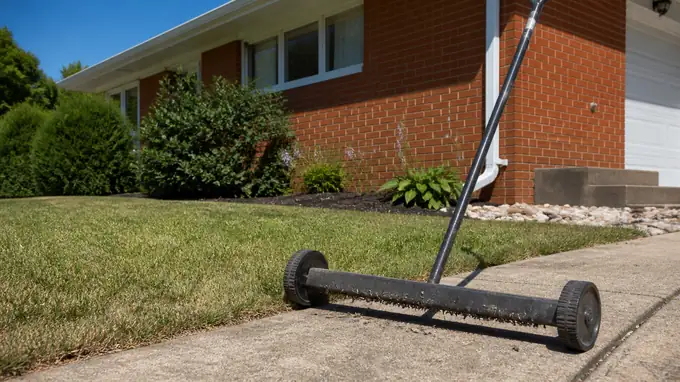
A worker pushes a magnetic sweeper across the lawn to collect stray nails. at a red-brick ranch home in Madison, WI, in clear late-morning sun.

Step 8: Cleanup

Roofing scatters nails, so cleanup is part of the job, not an afterthought. We run magnetic sweepers across the driveway, lawn, flower beds and the street out front, then run them again. Gutters are cleared of granules and scraps, and downspouts are checked for blockages. Tarps come up and the dumpster leaves. Spare shingles from your roof are left with you for future repairs, if you want them.

Get a Free Estimate

Request an Estimate

Tap to call +1 608-594-7071